Play-Based Learning and Traditional Learning: What’s Best for Your Child?
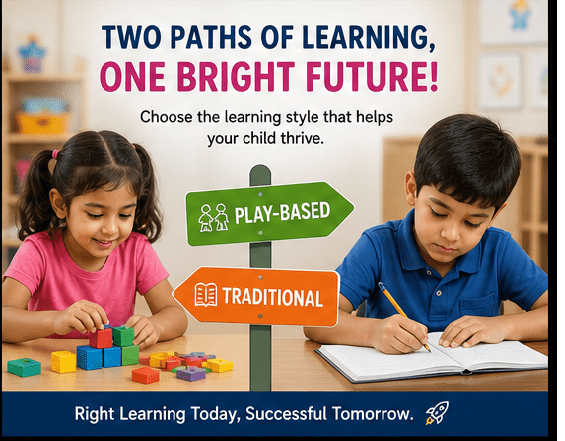
Choosing the right learning method for your child is one of the most important decisions you will make as a parent. Early education shapes how a child thinks, learns, and grows. Today, many parents feel confused between play-based learning and traditional learning. Both methods have their own benefits, but which one is truly best for your child?
At HumptyNest.com, we believe that understanding both approaches can help you make the right choice for your child’s future.
What is Play-Based Learning?
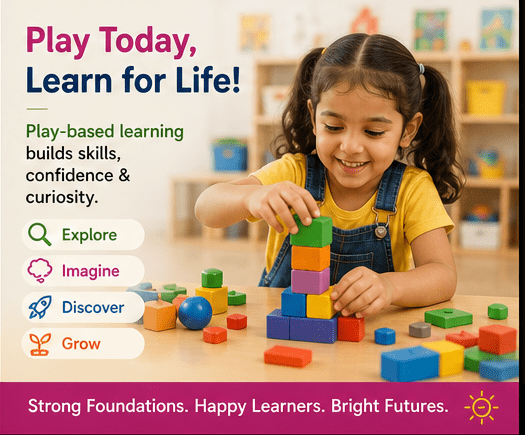
In the journey of discoverning better learning way (Play-based learning vs Traditional Learning), we will study about Play-based learning is a method where children learn through play, activities, and real-life experiences. In this approach, children explore, imagine, and discover new things in a fun and relaxed environment.
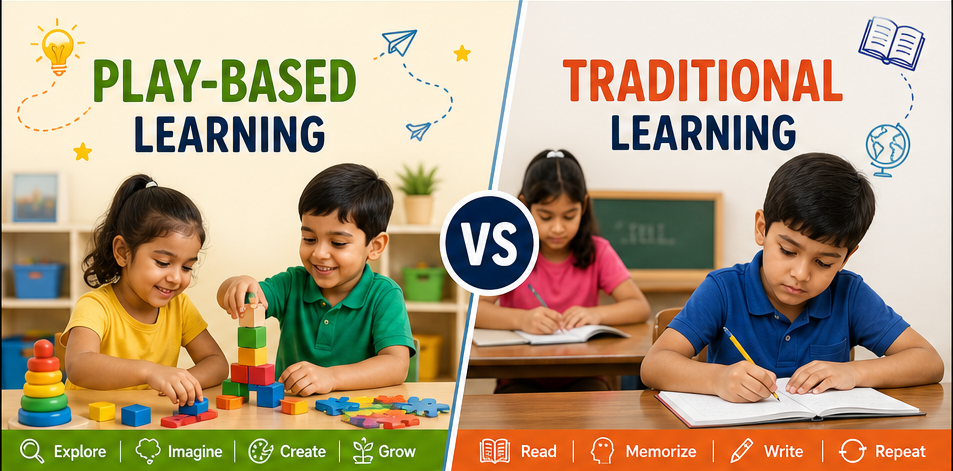
Teachers guide children instead of forcing them to memorize lessons. For example, children can learn counting through games, shapes through puzzles, and language through storytelling.
Key Features of Play-Based Learning:
- Learning through games and activities
- Focus on creativity and imagination
- Child-centered approach
- No pressure of exams
- Encourages curiosity
This method makes learning enjoyable and natural for young children.
What is Traditional Learning?
After Play-Based Learning, Traditional learning is the most common method used in many schools. In this approach, teachers teach lessons in a structured way, and children listen, read, and write.
This method focuses on textbooks, classroom discipline, and regular tests. Children usually follow a fixed schedule and curriculum.
Key Features of Traditional Learning:
- Teacher-centered approach
- Focus on books and written work
- Structured classroom environment
- Regular exams and assessments
- Emphasis on memorization
Traditional learning builds academic knowledge and discipline.
Key Differences Between Play-Based Learning vs Traditional Learning
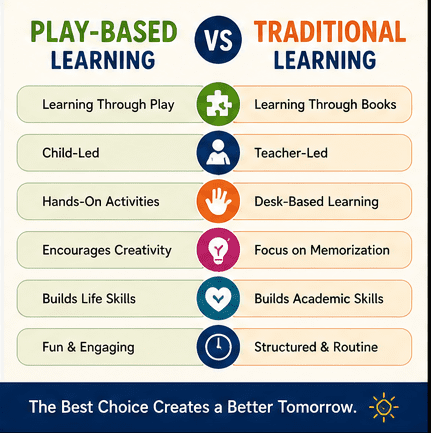
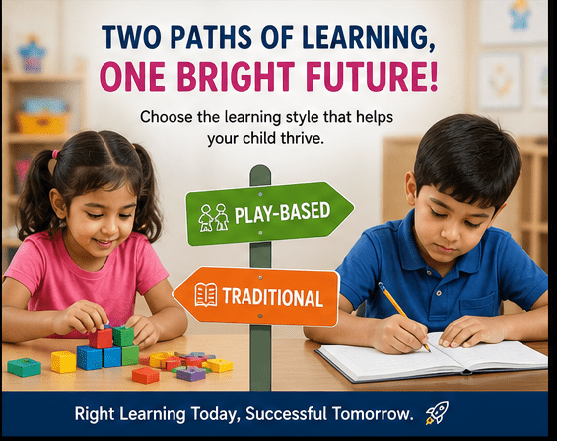
Understanding the difference between these two methods(Play-Based Learning vs Traditional Learning) can help you decide what suits your child best.
1. Learning Style
Play-based learning allows children to learn by doing. They explore and understand concepts through activities. Traditional learning focuses more on listening and memorizing.
2. Child Engagement
Children stay more engaged in play-based learning because it feels like fun. In traditional classrooms, children may sometimes feel bored due to routine methods.
3. Creativity and Thinking
Play-based learning encourages creativity and problem-solving. Traditional learning focuses more on correct answers and fixed methods.
4. Pressure and Stress
Play-based learning reduces stress because there are no strict exams. Traditional learning can create pressure due to tests and expectations.
5. Skill Development
Play-based learning builds life skills like communication, teamwork, and decision-making. Traditional learning focuses more on academic skills.
Benefits of Play-Based Learning
Play-based learning offers many advantages, especially for young children.
1. Encourages Natural Learning
Children learn best when they are happy and interested. Play-based learning make learning fun and meaningful.
2. Builds Problem-Solving Skills
When children play, they face small challenges. They learn how to think, try different solutions, and succeed with the help of play-based learning.
3. Improves Social Skills
Group activities help children learn sharing, teamwork, and communication. This is also can achieve with the help of play-based learning.
4. Boosts Confidence
With the help of play-based learning, Children feel confident when they explore and learn on their own without fear of failure.
5. Supports Overall Development
This play-based learning method supports emotional, physical, social, and mental growth.
Benefits of Traditional Learning
In the journey of discover better learning way in between (Play-based learning vs Traditional Learning), Traditional learning also has its own importance, especially in later stages of education.
1. Strong Academic Foundation
It helps children learn reading, writing, and basic subjects in a structured way.
2. Discipline and Routine
Children learn to follow rules, manage time, and complete tasks.
3. Preparation for Exams
Traditional learning prepares children for competitive exams and higher education.
4. Clear Learning Goals
The curriculum provides clear objectives and measurable outcomes.
Which Method is Better(Play-based learning vs Traditional Learning) for Your Child?
There is no one-size-fits-all answer. Every child is different. Some children learn better through play, while others do well in structured environments.
However, for early childhood (ages 2–6), experts strongly recommend play-based learning. At this age, children are naturally curious and active. They learn best when they explore and enjoy the process.
Traditional learning becomes more useful as children grow older and need structured academic knowledge.
Both methods(Play-based learning and Traditional Learning) are help the child in many way.
The Best Approach: A Balanced Method(Play-based learning vs Traditional Learning)
Instead of choosing only one method((Play-based learning vs Traditional Learning), the best solution is to combine both approaches.
A balanced learning method includes:(Play-based learning vs Traditional Learning)
- Play-based learning for creativity and exploration
- Structured lessons for basic academics
- Interactive teaching methods
- A stress-free learning environment
This combination of play-based learning and Traditional learning, helps children enjoy learning while also building strong academic skills.
How to Choose the Right Learning Environment
As a parent, you should look for a school or daycare that offers a balanced approach.
Here are some tips:
- Check if the environment is safe and child-friendly
- Observe how teachers interact with children
- Look for activity-based learning methods
- Avoid places with too much academic pressure
- Choose a place that focuses on overall development
Always remember, a happy child learns better.
Role of Parents in Learning
Parents play a key role in their child’s education. You can support your child by:
- Encouraging play and creativity at home
- Reading stories together
- Asking questions to develop thinking skills
- Limiting screen time
- Praising efforts instead of just results
Your support builds confidence and love for learning in your child.
Frequently Asked Questions (FAQs)
At what age should children start play-based learning?
Children can start play-based learning as early as 2 to 3 years old. This method suits early childhood because young children learn best through play and exploration.
Does play-based learning improve brain development?
Yes, play-based learning supports brain development by encouraging creativity, critical thinking, and problem-solving. It also helps improve memory and social skills. hence, we can take a note for play-based learning vs traditional learning.
Can play-based learning prepare children for school?
Yes, play-based learning builds a strong foundation by developing basic skills like communication, confidence, and curiosity. These skills help children adjust easily to formal schooling later. hence, we can take a note for play-based learning vs traditional learning.
Conclusion
Both play-based learning and traditional learning have their own benefits. Play-based learning focuses on creativity, confidence, and life skills, while traditional learning builds academic knowledge and discipline.
For young children, play-based learning is the best starting point. It helps them enjoy learning and develop essential skills naturally. As they grow, a mix of both methods creates a strong foundation for future success.
At HumptyNest.com, we believe that every child deserves a joyful and meaningful learning experience. When learning is fun, children grow into confident, curious, and capable individuals.
for more blog
Looking for the best playway and daycare for your child? Explore HumptyNest programs today!