
Let’s start our journey to discover how daycare schools improve social skills and confidence in children in early stage. Every parent wants their child to grow into a happy, confident, and successful person. Early childhood plays a very important role in shaping a child’s personality and behavior. This is why many parents today choose daycare schools that focus not only on education but also on emotional and social development.
A daycare school is much more than a place where children spend time while parents work. It is a learning environment where children interact with others, build friendships, develop communication skills, and gain confidence through daily activities. These experiences help children become socially active and emotionally strong from an early age.
In this article, we will explore how daycare schools improve social skills and confidence in children and why they are important for overall child development.
What Are Social Skills in Children?
Social skills are the abilities that help children communicate and interact with others in a positive way. These skills include:
- Talking and listening
- Sharing and caring
- Teamwork and cooperation
- Understanding emotions
- Respecting others
- Solving small conflicts peacefully
Children are not born with these skills. They learn them slowly through experiences, observation, and interaction with people around them. Daycare schools provide the perfect environment for this learning process. This is how daycare schools improve social skills and confidence in children.
Why Confidence Is Important in Early Childhood
In the journey to discover how daycare schools improve social skills and confidence in children, We will know how Confidence helps children believe in themselves and their abilities. A confident child feels comfortable speaking, participating in activities, asking questions, and trying new things.
Children with good confidence often:
- Express their thoughts clearly
- Make friends easily
- Participate in group activities
- Learn faster
- Handle challenges better
- Feel emotionally secure
Building confidence at an early age creates a strong foundation for future success in school and life.
How Daycare Schools Improve Social Skills in Children
1. Children Learn to Interact with Others
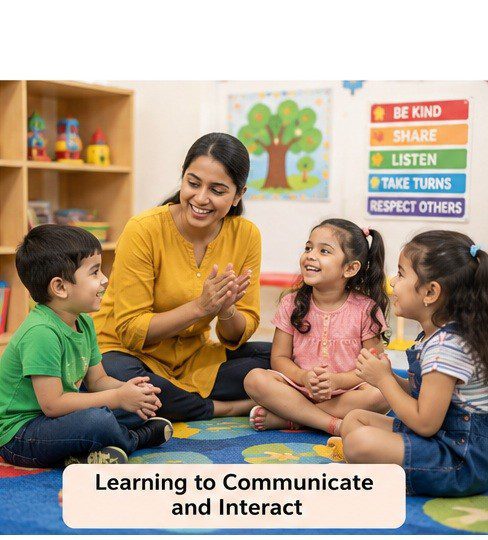
At home, children usually spend most of their time with family members. In daycare schools, they meet children of the same age group. This daily interaction teaches them how to communicate and behave with others.
Children learn:
- How to introduce themselves
- How to start conversations
- How to listen when others speak
- How to respond politely
Regular interaction helps shy children become more comfortable around people.
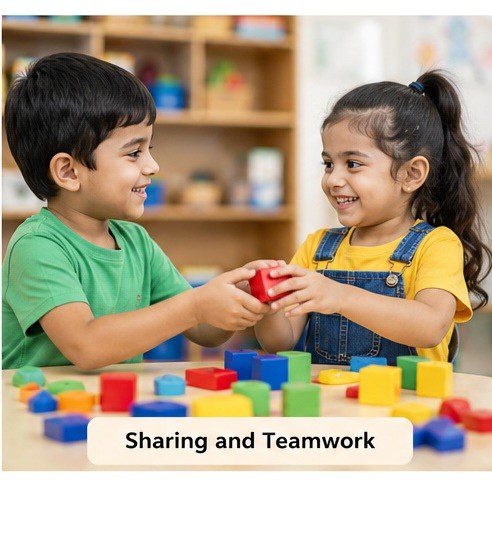
2. Sharing and Teamwork Become Daily Habits
Daycare schools encourage children to play, learn, and eat together. During these activities, children learn the importance of sharing toys, waiting for their turn, and cooperating with classmates.
Group games and classroom activities teach:
- Patience
- Cooperation
- Kindness
- Respect for others
These small lessons help children become socially responsible individuals. Again we get to know how daycare schools improve social skills and confidence in children.
3. Children Build Friendships
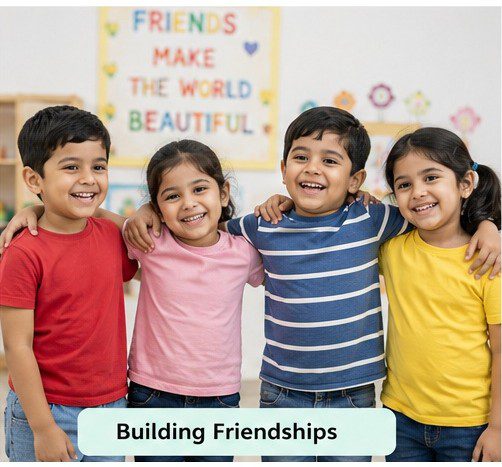
In the journey of how daycare schools improve social skills and confidence in children, We also get to know that Friendships are very important for emotional growth. In daycare schools, children make new friends and learn how to maintain relationships.
Friendships teach children:
- Trust
- Empathy
- Emotional support
- Communication skills
Children feel happy and secure when they have friends around them. This emotional comfort improves their confidence and social behavior.
4. Daycare Activities Encourage Communication
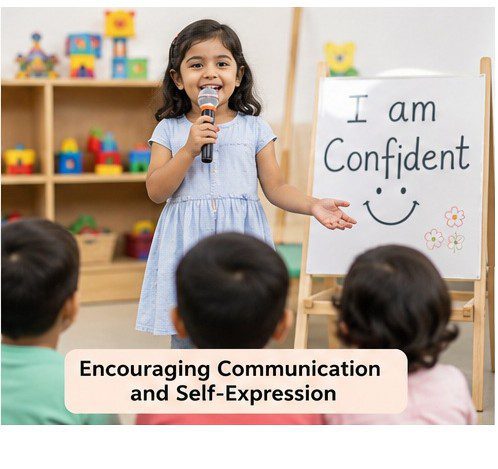
In the journey to improve social skills and confidence in children, Most daycare schools include storytelling, singing, role play, dancing, and group discussions in their daily routine. These activities encourage children to speak and express themselves freely. And parents discover how daycare schools improve social skills and confidence in children.
For example:
- Storytelling improves vocabulary and speaking skills
- Role play develops imagination and confidence
- Singing activities help children participate without fear
When children participate regularly, they slowly become more expressive and confident.
5. Children Learn to Handle Emotions
Young children often struggle to understand emotions like anger, sadness, frustration, or excitement. Daycare teachers help children identify and express these emotions in healthy ways.
Teachers guide children by teaching them:
- How to calm down
- How to use words instead of crying or fighting
- How to understand others’ feelings
This emotional learning improves social behavior and helps children interact positively with others. This is how a daycare school help improve social skills and confidence in children.
6. Children Become More Independent
By developing and improve social skills and confidence in children. Daycare schools encourage children to perform small tasks independently. These tasks may include:
- Keeping toys back in place
- Washing hands
- Eating without help
- Carrying their bags
- Organizing personal belongings
When children complete tasks on their own, they feel proud of themselves. This feeling increases self-confidence and responsibility.
How Daycare Schools Build Confidence in Children
1. Positive Encouragement from Teachers
Good daycare teachers motivate children with kind words and appreciation. Even small achievements receive praise and encouragement.
For example:
- “Very good!”
- “You did it!”
- “Excellent sharing!”
- “Great speaking!”
Positive feedback makes children feel valued and confident. It encourages them to try new activities without fear.
2. Participation in Group Activities
Daycare schools organize many group activities such as:
- Dance performances
- Art and craft sessions
- Sports activities
- Music classes
- Celebration events
These activities allow children to showcase their talents and abilities. Performing in front of others helps children overcome fear and improve social skills and confidence in children.
3. Safe and Supportive Environment
A daycare school provides a safe and caring environment where children feel emotionally secure. When children feel safe, they become more open to learning and socializing and ready to improve social skills and confidence in children.
Supportive teachers and friendly classmates help children:
- Feel accepted
- Express their feelings freely
- Participate without hesitation
This positive environment plays a major role in building confidence.
4. Problem-Solving Skills Improve Confidence
Children face small challenges every day at daycare schools. For example:
- Solving puzzles
- Managing disagreements
- Completing activities
- Learning new tasks
In the journey to how a daycare school help improve social skills and confidence in children. Teachers encourage children to think independently and solve simple problems on their own. Successfully handling challenges makes children feel capable and confident.
5. Routine and Discipline Create Emotional Stability
Daycare schools follow a regular schedule for learning, playtime, meals, and rest. A structured routine helps children feel secure and organized and improve social skills and confidence in children.
Children become more confident when they know:
- What to expect
- What activities will happen next
- How to follow instructions
Discipline and routine also improve focus and self-control.
Role of Play in Social and Emotional Development
Role of Play in Social and Emotional Development to improve social skills and confidence in children, Play is one of the most effective ways children learn social skills and confidence. Through play, children explore the world around them and learn naturally.
Benefits of Play-Based Learning
Improves Communication
Children talk, discuss, and express ideas while playing with others.
Encourages Teamwork
Group games teach cooperation and coordination.
Reduces Fear and Shyness
Fun activities help children feel relaxed and comfortable.
Boosts Creativity
Creative play improves imagination and problem-solving skills.
Develops Leadership Skills
Children sometimes lead games and activities, which increases confidence.
Play-based learning makes the daycare experience enjoyable and educational at the same time.
Importance of Teacher Support in Daycare Schools
Teachers play a very important role in child development. A caring and trained teacher understands each child’s personality and learning style, that helps in improve social skills and confidence in children.
Good daycare teachers:
- Encourage shy children
- Support emotional development
- Teach positive behavior
- Create inclusive classroom activities
- Build trust with children
Children feel more confident when they receive support, love, and attention from teachers.
How Parents Can Support Social Development at Home
Parents and daycare schools should work together to help children grow socially and emotionally. And Improve social skills and confidence in children.
Here are some simple ways parents can support learning at home:
Encourage Conversation
Talk to your child daily and listen carefully to their thoughts.
Arrange Playdates
Allow children to spend time with friends and relatives.
Teach Good Manners
Simple habits like saying “please” and “thank you” improve social behavior.
Appreciate Efforts
Praise children for trying new things and completing tasks.
Avoid Overprotection
Allow children to make small decisions independently.
When parents and teachers work together, children develop stronger confidence and better social skills.
Long-Term Benefits of Daycare Schools
The lessons children learn in daycare schools stay with them for many years. Early social and emotional development creates a strong base for future learning and success and improve social skills and confidence in children.
Children who attend quality daycare schools often:
- Adjust better in formal schools
- Build friendships easily
- Participate actively in classrooms
- Handle emotions more effectively
- Develop leadership qualities
- Become independent learners
Confidence and communication skills also help children in academics, sports, and future careers.
Choosing the Right Daycare School
Parents should choose a daycare school that focuses on both education and personality development. Also helps to improve social skills and confidence in children.
Look for These Features:
- Safe and clean environment
- Friendly and qualified teachers
- Play-based learning activities
- Small classroom size
- Good communication with parents
- Creative and interactive programs
A good daycare school creates a happy environment where children learn, grow, and enjoy every day.
Conclusion
Daycare schools play a major role in improving social skills and confidence in children. They provide a safe and interactive environment where children learn communication, teamwork, independence, and emotional understanding.
Through play-based activities, friendships, teacher support, and group learning, children slowly become more confident and socially active. These early experiences help them succeed not only in school but also in life.
Choosing the right daycare school can make a positive difference in your child’s emotional, social, and educational journey. A happy and confident child today grows into a successful and responsible adult tomorrow.
For parents, investing in quality early childhood education is one of the best gifts they can give to their children.
To read our another blog